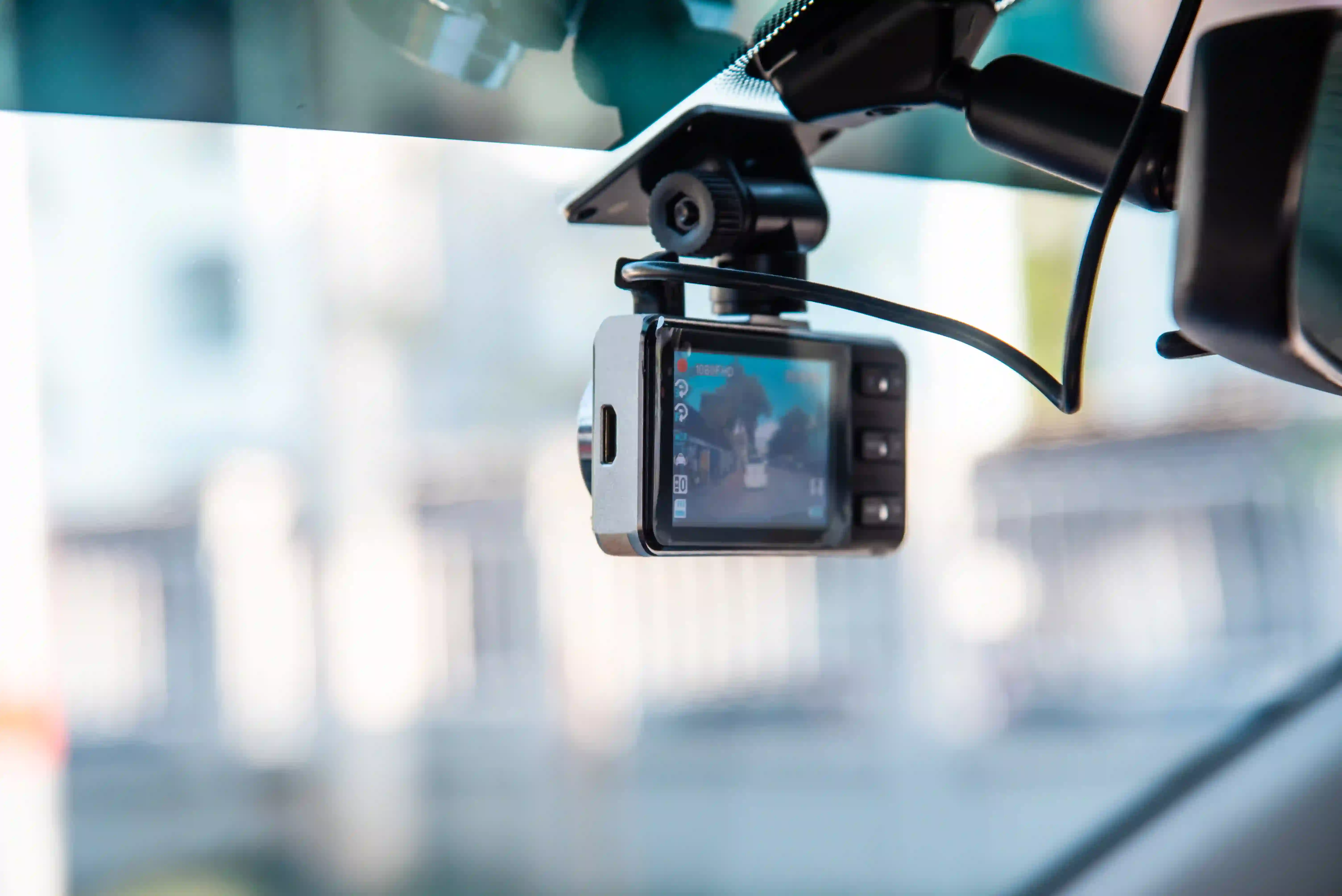

Dash cameras in commercial vehicles have long functioned as passive recording tools, capturing footage that is typically only reviewed after an incident. When nothing happens, the data is stored, overwritten and rarely revisited. For many fleets, this retrospective use of video has been considered sufficient.
That position is now changing. Across UK commercial fleet operations, video telematics is evolving from a reactive evidential tool into a forward-looking source of operational intelligence. The role of the camera is no longer confined to reconstructing events after the fact. Instead, it is increasingly used to surface behavioural patterns, emerging risks and early indicators of incidents before they materialise.
The focus is shifting accordingly. Rather than asking what happened, fleet operators are beginning to examine what the data is revealing in advance, and how it can be used to intervene earlier, reduce exposure and improve outcomes.
The Problem with Footage That No One Watches
A persistent issue across fleet video telematics environments is not a lack of data, but an excess of it. Safety teams are generating more footage than can be reviewed properly, which creates operational noise rather than clarity. Alerts accumulate, clips queue and attention gets pulled in too many directions. In practice, this leads to two familiar outcomes: either genuine fleet safety early warning signals are buried beneath low-value events, or alert thresholds are reduced simply to make the volume manageable. Both increase risk. One hides it and the other filters it out.
Fleet News has warned operators against this exact pattern, reporting that suppliers of AI-enabled video telematics advise fleets not to reduce camera sensitivity purely to lower alert volumes, as doing so increases the chance of missing genuine safety events. The result is a system that generates activity without necessarily improving oversight. Safety teams end up spending time reviewing routine driving behaviour while more meaningful indicators receive less attention. That is not predictive fleet risk management, it is reactive review dressed up as control.
The limitation sits within the architecture of many legacy fleet video telematics systems. Single-frame analysis captures isolated moments, applying rules without context. Road risk does not behave in isolation. It develops across sequences, influenced by behaviour, environment and timing. Systems that fail to read across that continuity will always struggle to surface meaningful fleet safety early warning signals.
What Changes When AI Reads the Pattern, Not Just the Frame
Modern AI fleet dashcam risk detection shifts the focus from isolated events to behavioural patterns. Instead of analysing a single frame, these systems interpret sequences. Context becomes visible. A brief glance is distinguished from sustained distraction. A justified braking event is separated from poor anticipation.
This is where fleet video telematics begins to produce operational value. Alert volume reduces, but signal quality improves. Safety teams receive fewer interruptions, but more relevant insight. That is the foundation of predictive fleet risk management.
Motive’s AI Dashcam Plus, launched in January 2026, illustrates how far AI fleet dashcam risk detection has advanced. Built on the Qualcomm Dragonwing QCS6490 processor, it runs over 30 AI models simultaneously, combining video, audio, telematics and motion data. The outcome is not more alerts, but better interpretation. Subtle indicators, such as vibration patterns or audio anomalies, become part of a wider risk profile.
The reported outcomes reinforce this shift. Since 2023, the platform has been estimated to have helped prevent over 170,000 collisions in the US, with customers seeing an 80% reduction in incidents and a 63% reduction in associated costs. These are not improvements driven by better recording. They reflect the impact of identifying fleet safety early warning signals before escalation.
Early Signals Are Not the Same as Early Alerts
There is a critical distinction between speed and foresight. A faster alert does not equate to earlier detection. Predictive fleet risk management depends on identifying signals before they reach alert thresholds.
A fleet safety early warning signals approach looks beneath individual events. Patterns emerge over time. Repeated near-misses on a route. Gradual changes in following distance. Subtle variations in driving behaviour across different conditions. Individually, these may appear insignificant. Collectively, they indicate developing risk.
This is where integrated fleet video telematics becomes essential. Telematics alone can highlight anomalies. Dashcam context explains them. A harsh braking event may be logged, but without visual context, its cause remains unclear. When combined, AI fleet dashcam risk detection enables fleets to distinguish between necessary action and behavioural risk.
At its core, predictive fleet risk management replaces hindsight with interpretation. It shifts the question from what happened to what is forming.
How the Market Is Responding
Technology development across the sector reflects this shift. Geotab’s Go Focus Pro, introduced at Geotab Connect in February 2026, integrates continuous AI inference within a single fleet video telematics device. The emphasis is not on post-incident review, but real-time awareness.
Geotab’s own research highlights the urgency. While 99% of UK drivers recognise the benefits of fleet video telematics, perceived risk on the road continues to increase. Stress, visibility challenges and low-speed incidents remain persistent contributors. These are precisely the conditions where Fleet safety early warning signals matter most.
Platform consolidation is accelerating this transition. Wialon’s integration with Lytx AI dashcams embeds AI fleet dashcam risk detection directly within a unified environment. Video, GPS and vehicle data are no longer separate streams. They form a continuous dataset. Adoption trends reflect this. Connected video usage grew over 80% in 2024 and continued to rise through 2025, signalling a broader move toward integrated predictive fleet risk management models.
The Role of Connected Data in Fleet Risk Strategy
The move toward unified platforms is redefining how fleet video telematics is applied. Historically, safety data existed in silos. Dashcam footage, telematics, licence checks and inspection records were disconnected. Each provided partial insight.
Bringing these together enables meaningful interpretation. The RAC’s expanded telematics partnership demonstrates this shift, combining AI dashcams, crash detection and behavioural data within a single system. The objective is clear. Reduce complexity while improving visibility into risk.
For predictive fleet risk management to function effectively, integration is essential. AI fleet dashcam risk detection must operate alongside telematics, not separately. Alerts must be prioritised based on relevance, not sequence. Data must translate into action, not archive.
This is the principle underpinning Prolius. By combining fleet video telematics, driver monitoring and operational data within one platform, fleets gain the ability to identify fleet safety early warning signals in context and act before escalation.
What Fleet Operators Need to Get Right
Technology alone does not deliver outcomes. The effectiveness of AI fleet dashcam risk detection depends on how it is used. Unreviewed alerts and unused footage provide no value.
Operational discipline matters. Predictive fleet risk management requires structured review processes, prioritisation of meaningful signals and consistent follow-up. Without this, even the most advanced fleet video telematics system becomes passive.
Driver engagement is equally critical. Adoption improves when systems are positioned as protective rather than punitive. Evidence that supports drivers, particularly in disputed incidents, builds trust. When fleet safety early warning signals are used to guide coaching rather than assign blame, behavioural change follows.
The technology identifies patterns. The organisation determines whether those patterns lead to action.
Building the Infrastructure for Risk Intelligence
The role of the dashcam has fundamentally changed. What was once a recording device is now a central component of predictive fleet risk management. With AI fleet dashcam risk detection, fleets can interpret daily operational data as a continuous stream of insight rather than a retrospective archive.
This shift transforms how fleet video telematics is valued. It becomes less about evidence and more about anticipation. Less about incidents and more about indicators. The ability to identify fleet safety early warning signals before escalation defines the difference between reactive oversight and proactive control.
For fleets assessing their current position, the starting point is simple. Understand what your data is not showing. In most cases, the gaps are not immediately visible, but they are significant.
To see how Prolius connects fleet video telematics and AI fleet dashcam risk detection within a unified workflow, book a demo with our team.