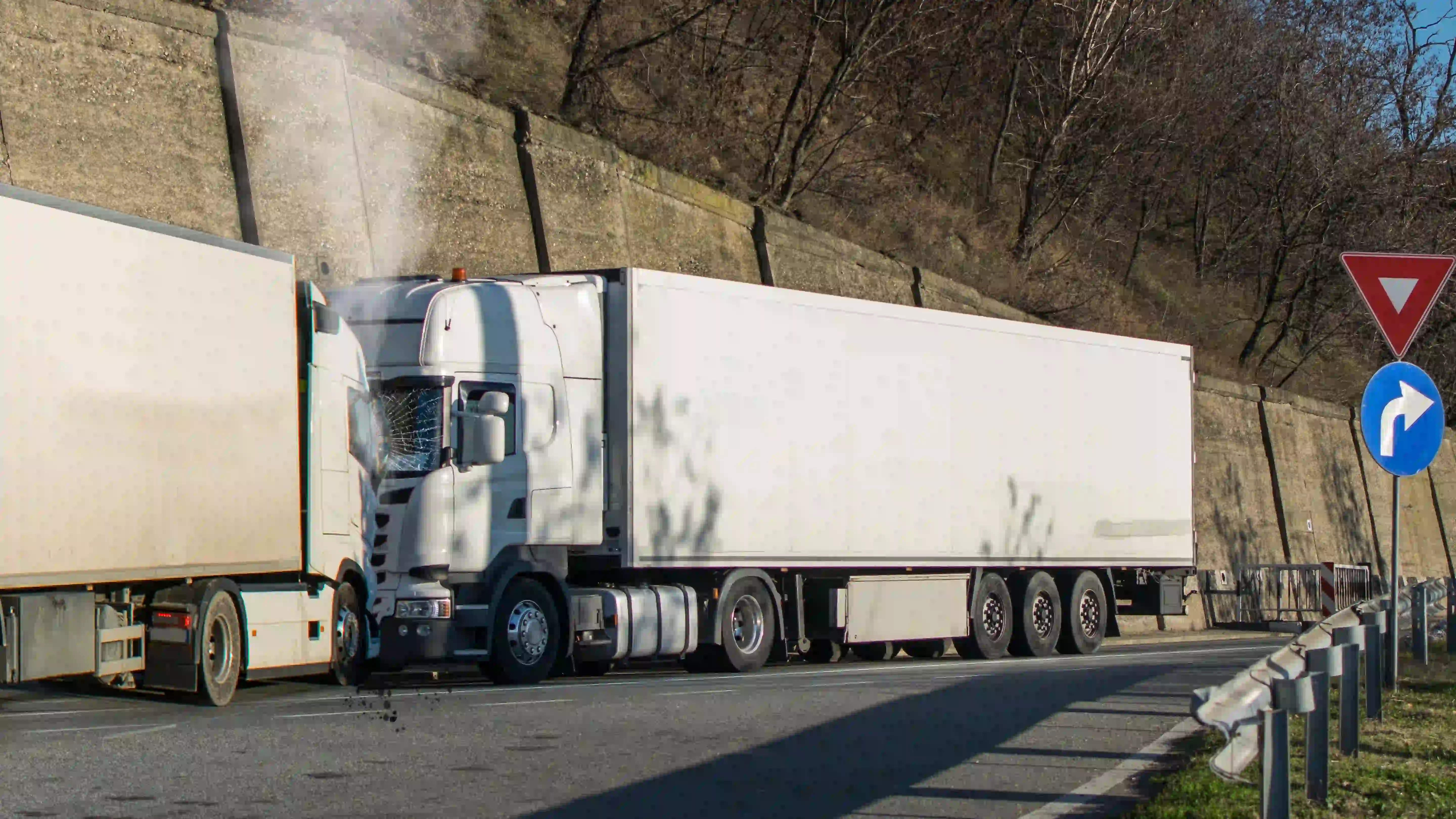

When a road incident involving a fleet vehicle occurs, the minutes that follow are the most important for managing what comes next. The vehicle condition at the scene, the driver’s account, third-party details, witness information and photographic evidence are all available at that moment. How that information is captured, stored and connected to the wider fleet record determines how useful it becomes in the days, weeks and months that follow.
For many UK fleet operators, that process is still fragmented. Incident reports are completed separately from vehicle service records. Driver behaviour data sits in the telematics platform. Camera footage is stored in a separate system. Insurance correspondence is managed outside the fleet management environment entirely. As reported by Fleet News, bodily injury claim severity is increasing by roughly 20 - 22%, while total loss claim costs have increased by nearly 29%. In that context, the quality of incident data and how it is managed has a direct bearing on cost. Effective fleet accident management begins with keeping all of that data in one connected place.
What Disconnected Incident Data Actually Costs
The financial impact of a road incident extends well beyond the cost of the repair. Insurance claim handling, vehicle downtime, driver absence, third-party liability and administrative time all contribute to the total cost of an incident. When the data behind that incident is fragmented, each of those costs is harder to manage and more likely to be higher than it needs to be.
A fleet accident management software environment that holds all incident-related data in a single case file changes this fundamentally. The vehicle involved, the driver record, the telematics data from the journey, the camera footage from the incident and the subsequent repair and insurance correspondence are all connected from the moment the incident is logged. Nothing needs to be retrieved from a separate system, reformatted or reconciled before it can be used.
The alternative is a process that relies on manual assembly. Someone in the fleet team requests the telematics data from one platform, the footage from another and the driver record from a third. They compile those elements into a document that is then shared with the insurance team. At each step there is an opportunity for delay, for omission and for the information to arrive in a form that does not match the structure expected by the recipient.
The Role of Real-Time Incident Reporting
Accurate incident data begins at the roadside. The information captured in the immediate aftermath of an incident is more reliable than information recalled hours or days later. Details become less precise as time passes. Third parties move on. Vehicle condition changes if the vehicle is driven further before inspection.
Real-time fleet incident management allows drivers to log incidents through a mobile application at the scene, capturing photographs, vehicle condition notes, third-party details, witness statements and police reference numbers as they occur. That record is immediately available to the fleet team without a phone call, a paper form or a delay.
The benefit is not only speed but it is also accuracy. A report completed at the roadside by the driver involved contains information that no subsequent reconstruction can fully replicate. The time, the location, the road conditions, the positions of the vehicles and the immediate account of what occurred are all recorded before memory, interpretation and time can alter them.
As reported by Fleet News, one fleet operator reduced the average time taken to report an incident from around four days to having 80% of collisions reported within four hours after implementing a single integrated accident management solution. That shift in reporting speed reduced call flow, cut avoidable costs and improved loss recovery across the operation.
How Incident Data Connects to the Wider Fleet Record
An incident does not occur in isolation. It occurs at a point in a vehicle’s operational history, driven by a specific individual, on a specific route, under specific conditions. All of that context exists in the fleet management system before the incident takes place. The value of connecting the incident record to that context cannot be overstated.
The vehicle’s service history tells whether it was in a maintained state at the time of the incident. A vehicle involved in a collision that was overdue for a brake inspection presents a different liability position to one that was fully maintained. That distinction can only be made if the maintenance record is accessible alongside the incident record.
The driver’s behaviour history tells whether the incident follows a pattern. As reported by Fleet News, leading fleet operators are building risk scores for each driver that cover accident history, fines, SMR spend, tyres, telematics score and licence status. When incident history, behaviour scores and licence penalty points are all visible in one driver profile, patterns become apparent. That visibility allows intervention before a further incident occurs rather than after.
The case file that connects every element of the incident to the wider vehicle and driver record is the foundation of effective fleet claims management. Without it, each element is assessed individually and the full picture is never seen.
Video Evidence and the Question of Data Integrity
Dash camera footage has become central to fleet accident management in recent years. Its value as evidence in insurance claims, disputes and legal proceedings is well established. Fleet operators who invest in camera systems do so precisely because objective footage resolves ambiguity in a way that written accounts cannot.
As reported by Fleet News, driver behaviour data can help identify trends around harsh braking, speeding, distraction or fatigue, enabling targeted interventions that improve safety outcomes rather than relying solely on reactive incident management. The data that exists across the fleet record before an incident occurs is as important as the footage captured during it.
Footage stored within the fleet management environment alongside the incident record, the vehicle data and the driver profile creates a single evidential package. The footage is associated with a specific vehicle, a specific journey and a specific driver. The contextual data that gives the footage meaning is present alongside it rather than held separately and assembled retrospectively.
When footage cannot be connected to its operational context, the evidential value is reduced. A clip that shows an impact without the associated journey history, driver profile and vehicle condition record tells a partial story. Connected incident data tells a complete one.
Insurance Integration and the Claims Process
The relationship between a fleet operator and its insurer is strengthened when incident data is accurate, complete and consistently structured. An insurer reviewing a claim against a comprehensive case file that includes real-time incident reporting, vehicle maintenance history, driver behaviour data and timestamped footage is better placed to assess liability quickly and resolve the claim efficiently.
For fleet operators, this has a measurable impact on both cost and time. Faster claims resolution reduces vehicle off-road time. Clearer liability assessment reduces the risk of costs being absorbed when the fleet was not at fault. Better data over time builds a more accurate risk profile that can support more favourable premium discussions at renewal.
As reported by Fleet News, for a fleet of 1,000 vehicles, a 15% increase in average claim severity can increase annual claim costs from approximately £1.22 million to £1.4 million, even without any increase in accident frequency. Visibility delays affect not only safety outcomes but overall fleet economics. When risk is detected late, the window for intervention has already closed.
Managing Incidents Across Multiple Locations and Vehicles
For fleet operators running vehicles across multiple depots or regions, the challenge of fleet accident management is compounded by scale. An incident involving a vehicle in one location needs to be visible to the fleet team centrally, to the local manager responsible for that vehicle and to the insurance team managing the claim. When those three groups are working from different systems, the same information is requested multiple times, stored in multiple places and reconciled after the fact.
A centralised incident management environment ensures that everyone with a legitimate need to view an incident record can access the same information simultaneously. The local manager sees the real-time notification. The central fleet team sees the case file. The insurance team accesses the structured data through a controlled integration. No information is duplicated. No version is more or less current than another.
This matters particularly for large fleets where the volume of incidents across a year is significant. Without a structured case management system, incidents that share common characteristics may never be identified as related. A recurring pattern on a specific route, involving a specific vehicle type or occurring at a specific time of day may be present in the data but invisible because no one is looking across the full incident history consistently.
Structured fleet claims management reporting across the full incident history allows fleet operators to move from processing individual cases to understanding the conditions that generate them. That shift from reactive to analytical is where the greatest long-term cost reduction sits.
Building a Defensible Incident Record Over Time
The value of a well-structured fleet accident management software environment is not only visible at the point of an individual incident. It accumulates over time.
An incident record that is complete, accurate and consistently structured becomes a reference point for future decisions. When a similar incident occurs six months later, the previous record provides context. When a driver’s insurance risk profile is reviewed at renewal, the incident history provides evidence. When a regulatory body or a legal representative requests documentation, the record is available in full without reconstruction.
Fleet operators who treat incident management as an administrative function rather than a data function miss the long-term value of what they are building. Every incident record, every driver notification, every repair outcome and every insurance correspondence adds to a body of evidence that tells the story of how the fleet operates and how risk is managed within it. That story is most useful when it is structured, connected and accessible.
The organisations that manage incident data well are not necessarily those that have the fewest incidents. They are those that understand what their incidents mean, respond to them effectively and use the information they generate to prevent the next one.
When Every Detail of an Incident Is in One Place
Incident data that is captured accurately, connected to vehicle and driver records and shared with insurers in a structured format is the foundation of effective fleet risk management. The cost of a poorly managed incident extends beyond the repair. It includes the time spent assembling information, the disputes that arise from incomplete records and the patterns that go unrecognised because the data never sits together.
Learn more about fleet accident management and how Prolius supports real-time incident reporting, case management and insurance integration across UK fleet operations. To see the platform in practice, book a demo.